

Key Considerations
- Choosing the right instrument sets a strong foundation for young beginners starting out.
- Acoustic instruments offer authentic key weight and rich natural acoustic sound resonance.
- Digital options provide flexible volume control and compact designs for modern homes.
- Enrolling in targeted lessons builds proper technique regardless of your chosen instrument.
Navigating Initial Instrumental Decisions
Starting a musical journey brings up big questions about equipment choices, especially when setting up a practice space at home. Parents often debate whether an upright acoustic or a modern digital instrument suits a child starting. Finding the right balance between authentic sound, budget, space, and maintenance will help keep practice sessions fun and productive.
Choosing the right path early on helps young students build essential finger strength and ear training. Professional instructors adapt their teaching methods to suit whichever instrument sits in your living room. Enrolling your child in a dedicated piano class for kids in Singapore ensures they build proper technique right from their first lesson.
Both traditional and digital options have unique strengths that cater to different household needs and budgets. Understanding how these features impact everyday practice makes it much easier to select the ideal option. Placing the right instrument in your home creates an inviting environment where young musicians love to practice daily.
Understanding Acoustic Instruments
Acoustic instruments produce sound through traditional physical mechanics, using real hammers striking steel strings inside a wooden frame. Playing an upright model teaches young students how subtle shifts in touch alter tone naturally, and enrolling your child in a structured piano class for kids in Singapore ensures they build this physical connection alongside expert guidance. Developing this tactile feel helps children build genuine finger strength and expressive musical control over time.
Having an acoustic instrument at home creates a deep sensory connection to music through physical sound vibrations. Students quickly learn to appreciate rich harmonic resonance while developing precise dynamic control during daily practice sessions.
Maintenance remains an important factor when placing an acoustic instrument in your living room. Regular tuning services and humidity control keep the interior wood and strings in healthy playing condition. Investing in consistent upkeep preserves the instrument’s rich tone, helping young learners stay inspired every time they sit down.
Exploring Digital Alternatives
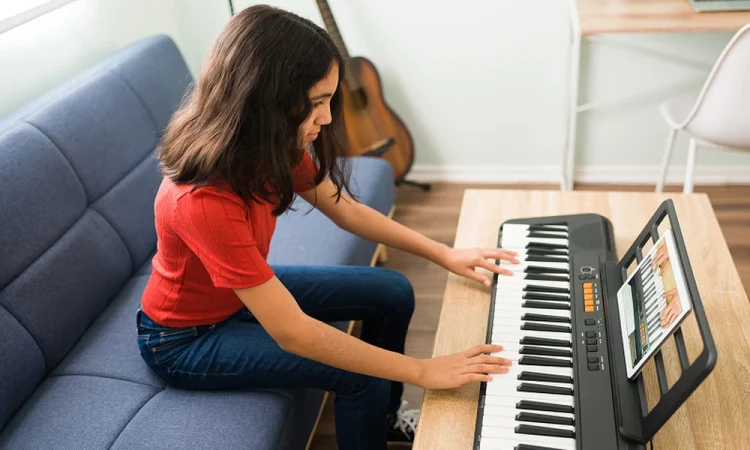
Digital models offer incredible flexibility for modern households with limited floor space or noise considerations. Compact frames fit easily into smaller rooms without sacrificing basic key layouts or essential practising functions. Built-in headphone jacks mean children can practise their favourite pieces late at night without disturbing family members.
Advanced digital options feature weighted key beds that closely replicate the physical feel of traditional acoustic keys. Students enjoy experimenting with varied sound settings, metronome features, and recording functions during home practice. Registering for comprehensive keyboard classes in Singapore helps young players transfer these digital skills to any instrument.
Digital options eliminate ongoing maintenance costs because internal sound chips never go out of tune. Lightweight designs make moving the unit between different rooms or housing locations completely hassle-free. Modern families appreciate how easily these reliable instruments fit into busy schedules while supporting consistent musical development.
Making the Right Choice for Your Home
Deciding between traditional and modern digital options comes down to your family’s daily routine and available space. Acoustic models offer unmatched tactile feedback, while digital alternatives provide convenient volume control and practice tools. Both options lay down an excellent foundation when supported by consistent practice and clear instruction.
- Instrument Versatility: Acoustic models deliver authentic tactile feedback, while digital setups offer flexible volume controls and practice features.
- Cognitive Development: Early music training builds spatial awareness, focus, and confidence in young learners.
- Adaptable Progression: Flexible lesson structures allow students to transition between different instrument types as their skills advance.
- Supportive Environment: A dedicated practice corner and steady encouragement matter far more than buying high-end equipment.
Early music training builds lasting confidence and strong cognitive abilities in children. Giving your child clear instruction tailored to their chosen instrument is easy when you enrol them in keyboard classes in Singapore. Providing the right support turns initial curiosity into a lifelong love for playing music.
Cultivating Lifelong Musical Growth
Choosing between acoustic and digital instruments comes down to your living space, budget, and personal family routine. Both options support fantastic learning outcomes when paired with steady encouragement and regular practice habits at home. Providing reliable guidance helps young players grow into confident musicians step by step. Contact Huckleberry Music School to book your child’s first lesson today.
Frequently Asked Questions
- Which is better for a complete beginner, acoustic or digital piano?
Both work well; choose based on your space, budget, and practice needs. - Do digital pianos require professional maintenance or yearly tuning?
No, digital models are maintenance-free as they don’t need tuning. - Is it possible to learn proper technique on a compact digital keyboard?
Yes, especially if you choose a digital model with weighted keys. - Does acoustic piano practice help with building child finger strength?
Yes, the resistance of physical hammers helps build finger strength. - Are headphone jacks useful for children practicing piano at home?
Yes, they allow for quiet practice without disturbing the household.


